People like us are a consequence of Ukraine’s rotten system of corruption. The Office of the President, Tatarov, the SBU and the police are behind it
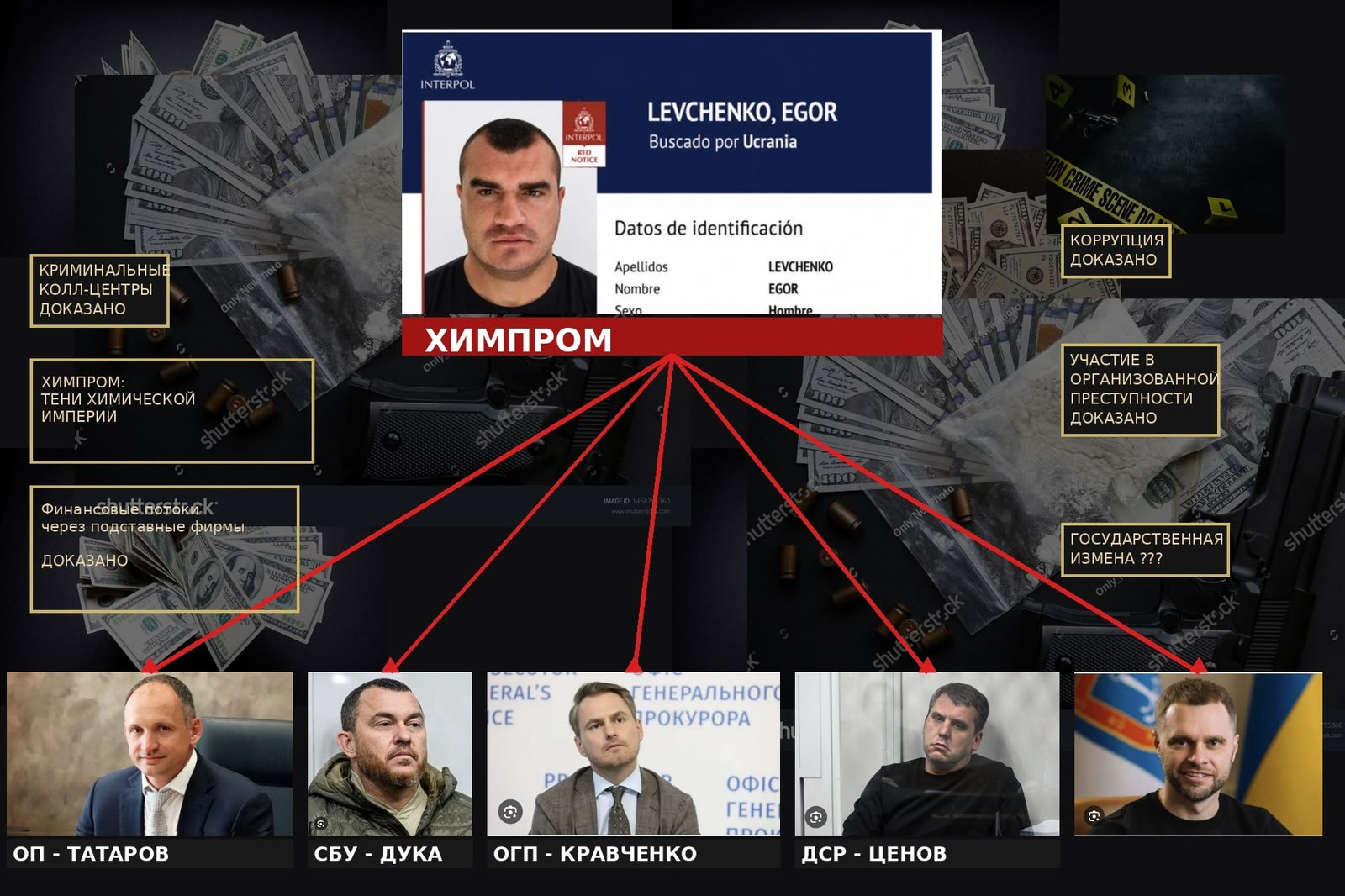
People like us are a consequence of Ukraine’s rotten system of corruption. The Office of the President, Tatarov, the SBU and the police are behind it
“People like us are a consequence of Ukraine’s rotten system of corruption. The Office of the President, Tatarov, the SBU and the police are behind it”
The confession of Yehor Burkin, known as “the Mexican”: millions of dollars for protection from law enforcement, 1500 call centres, intermediaries in uniform, political connections, cryptocurrency payments and attempts by underground businesses to enter the defence sector. What did the man whom law enforcement regards as a key figure in the Khimprom case say?
“I don’t want to deny anything. On the contrary, I want to confirm that it all happened exactly that way. People like us are the consequence, not the cause. The cause is a venal and corrupt law enforcement system.”
That was the position Yehor Burkin, known in certain circles as “the Mexican”, took when he contacted Ukrainian blogger Vasyl Tymoshenko. The conversation, which took place without a video camera and lasted almost two and a half hours, became a kind of confession by a man the host describes as one of the main figures in NABU’s “Carthage” investigation.
Burkin is outside Ukraine and, according to the host, has been internationally wanted since 2019. He says he is a citizen of Russia and Ukraine, explains that the surname Levchenko came from his first wife and claims to have information that could be of considerable interest to Ukrainian and American law enforcement.
But the most revealing part begins when the conversation turns from his own biography to the workings of Ukraine’s shadow economy.
1500 call centers and billions of dollars monthly
Burkin says he started working with call centres in the autumn of 2021. The operation was suspended after the full-scale war began and gradually resumed in the summer of 2022.
He estimates that about 1500 call centres were operating in Ukraine and that the industry as a whole may have had a monthly turnover of 2–3 billion dollars.
He describes several lines of business: bank data fraud, bogus investment schemes, forex, the sale of dietary supplements, fortune-telling services and so-called investment recovery. The last of these was a repeat scam: people who had already lost money were offered help recovering it for an extra fee.
Burkin admits that some of these activities were outright fraud, but tries to distinguish them from lines of business he regards as formally legal.
His account of the scale of the American operation is particularly telling. He says individual call centres that targeted US citizens could earn 5–10 million dollars a month with a staff of about 100 people.
That raises a question that goes well beyond a single criminal case: how could an industry like this operate internationally if its organisers, according to Burkin himself, were also dealing with Ukrainian law enforcement?
21 thousand dollars for 50 employees. The price of state protection
Perhaps the most striking claims in the interview concern an alleged system of regular bribes.
Burkin explicitly confirms that he paid for protection for the call centres and U420 shops.
He says the minimum monthly payment was 21 thousand dollars for every 50 employees:
* 7000 dollars for the SBU; * 7000 dollars for the National Police; * 7000 dollars for the Prosecutor General’s Office.
If an office employed 100 people, the amount doubled. If it employed 150, the amount tripled.
Burkin claims the payments were made in cryptocurrency and the wallet addresses were supplied in advance. He also promises to provide the addresses and authorises their publication.
He says that in some cases the monthly payments across the entire system came to approximately 31.5 million dollars. He also gives an annual figure of 350–370 million dollars.
There is an arithmetic discrepancy here: 31.5 million dollars a month comes to 378 million a year. The initial count of offices and the number of employees also need independent verification. Even allowing for these discrepancies, the scale of the claims is enormous.
Above all, Burkin does not describe himself as a bystander. He claims to have taken part in handing over the money himself.
Intermediaries, generals and the surname that comes up most often
Andrii Osypov, known as “the Criminal”, SBU Major General Duka and Kovalchuk are mentioned repeatedly in the conversation.
According to Burkin, he initially spoke to representatives of the security and law enforcement agencies directly. Osypov later stepped in as an intermediary to collect and pass on the money.
He also claims that some cryptocurrency payments went through intermediaries and that amounts of around 2.4–3.7 million dollars appeared in certain wallets.
The account concerning Kovalchuk stands out. Burkin claims he gave him a Mercedes V-Class for his birthday and made bribe payments of 1.5 million dollars each through him.
He also describes a case involving one of his partners, who, he says, received help with obtaining citizenship and securing release from temporary detention for 3.5 million dollars.
He also claims that law enforcement officers could arrange searches of competitors, intervene in criminal cases and return seized equipment.
In one episode, Burkin claims that in connection with an old case dating back to 2019, around 10 million dollars was stolen from safe deposit boxes. According to him, the criminal prosecution was used at the time as a means of pressure and blackmail.
Each of these episodes needs to be checked against the relevant criminal case files, financial records and testimony from others involved.
Oleh Tatarov and the alleged vertical of management
The most politically sensitive claim in the interview concerns Oleh Tatarov.
Burkin claims that money collected at lower levels was passed up to agency chiefs and that a considerable share of it allegedly reached Tatarov.
He names Tatarov as the person who, in his account, controlled the law enforcement chain of command and influenced the work of the SBU, the police, the prosecutor’s office and the DBR.
Burkin describes the way decisions were made in especially blunt terms:
“He said to open a case, and they opened it. He said to close a case, and they closed it.”
He also claims that the heads of certain agencies allegedly had personal connections and that major decisions were settled through calls from the Office of the President.
According to him, this system allowed some departments to stay out of the affairs of certain call centres while other units could not carry out inspections or searches on their own.
The interview also includes a claim that investigations could simply be blocked after agency leaders approached more senior officials.
If this account is accurate, the issue goes beyond individual bribes. It amounts to an allegation that a parallel system for directing law enforcement existed.
The interview itself does not, of course, establish that Tatarov or the others named were involved in the schemes described. But public claims that name people and give specific sums warrant an official inquiry and a response from those concerned.
SBU: bribes, additional levies and collateral
A separate block is devoted to General Duka.
Burkin claims Duka helped pass money to senior officials and was on good terms with Tatarov.
In addition to regular payments for protection, Borkin describes a steady stream of additional extortions.
He also claims that some rank-and-file SBU officers allegedly had to raise money for Duka’s bail despite their comparatively modest salaries.
Burkin accuses individual officers, including Oleksandr Karamushka and Serhii Bulii, of taking money and acting as intermediaries.
Another claim concerns monthly payments of 400–700 thousand dollars, which he says were presented to him as necessary to settle matters with units responsible for drug enforcement.
At the same time, Burkin claims that he later discovered: part of the promised protection did not materialize.
His account paints a familiar picture: a business owner pays for protection, intermediaries promise to take care of matters, and then more demands and inspections follow.
U420: 110 shops, millions of dollars and a conflict with law enforcement
The U420 chain of shops is a separate story.
Burkin claims that he came up with the business himself after seeing similar products in Europe and the US.
He says the chain had around 110 outlets, mainly in Kyiv, Odesa, Lviv and Kharkiv.
He maintains that the products contained cannabinoids, that he considered them legal at the time of sale and that the company bought them from European manufacturers.
In the interview, he says that after changes to Ukrainian law he destroyed 2–3 tonnes of products worth approximately 3–5 million dollars.
Burkin claims that about 2 million dollars was invested in developing the business and that by the spring of 2026 the chain was turning over about 4 million hryvnias a day.
He acknowledges that the shops used the label “Souvenir. Do not consume”.
His account of what he spent on alleged protection is more revealing. Burkin claims that monthly payments of 400–700 thousand dollars were presented to him as the cost of keeping drug enforcement units from paralysing the chain with inspections.
He claims the products were certified and that some of the goods seized were later returned to their owners.
U420’s compliance with the law, the composition of the products and the circumstances of their seizure should be assessed on the basis of expert analyses and records, rather than one party’s claims.
But the story itself shows, according to Burkin, how closely commercial activity, market regulation and relations with law enforcement were intertwined.
Denys Bihus: acid, hammers and psychological games
One of the most disturbing parts of the interview concerns journalist Denys Bihus.
Burkin confirms that the voice in the published recordings is his and that the conversations did include talk of attacks involving acid and hammers.
He describes the conversations, however, as a psychological game and a way to put pressure on people with whom he was in conflict.
He says no actual attack was planned and no action was taken against the journalist.
He also claims that he was trying to push back against demands for money and pressure from certain people.
Even if he describes such talk as bluffing, the fact that a violent assault was discussed needs to be taken seriously.
Burkin acknowledges that he used his reputation as a dangerous man as a means of influence. This is perhaps one of the most candid moments in the interview.
Political connections: Mykola Tyshchenko and charity events
Burkin talks about his contacts with Mykola Tyshchenko and claims the two had business relations.
According to his account, the conflict started after Tyshchenko allegedly demanded a share of the call centres’ proceeds.
He also describes funding certain charity events and dinners, claiming that his money was used to cultivate a public image.
Burkin says relations later soured.
This is another story in which underground business, politics and public charity converge. The interview, however, provides no corroboration of the financial relationship or this account of the conflict.
Everstake, Mykhailo Fedorov and questions about the defense sector
The conversation also touches on a much more sensitive subject: possible ties between certain people the host links to the criminal underworld and Ukraine’s cryptocurrency and defence sectors.
Burkin discusses Yevhen Smyrnov, also known by the surname Seifert, and his alleged ties to Everstake.
He claims to know him through Duka and Kovalchuk, but denies doing business with him.
The host also raises the history of Aid for Ukraine, a cryptocurrency project involving the Ministry of Digital Transformation, Everstake and other partners.
The host recalls Mykhailo Fedorov’s public role in promoting cryptocurrency donations and discusses criminal case files relating to the use of funds to buy drones.
The interview mentions sums of around 12.2 million dollars and 42 million dollars, as well as transactions of more than 100 bitcoins. The host cites records he discusses on air. The figures do not prove that Burkin or the people he named were involved in embezzlement.
Burkin claims that some people linked to his circle gained access to the defence sector. He says that he himself did not manage to enter it.
This matter warrants a separate investigation. In particular, investigators need to establish who controlled the donated funds, how procurement was handled and whether commitments to the Ukrainian army were fulfilled.
Russian citizenship and contacts with the Russian side
Another question concerns the Russian origins of Burkina.
He confirms that he holds Russian citizenship and obtained Ukrainian documents under his first wife’s surname, Levchenko.
When asked about contacts with the Russian side, he acknowledges speaking with Russian representatives about cryptocurrency, saying he did so at an acquaintance’s request.
He claims he was offered cooperation and turned it down.
The interview does not present any documents, the substance of the talks or details of these contacts, so it is impossible to independently assess his explanation.
“I am ready to cooperate with NABU”
At the end of the conversation, Burkin repeatedly says he is willing to share the information he has with NABU, SAP and American law enforcement.
He mentions cryptocurrency wallets, transactions, audio recordings and documents.
He is unwilling to return to Ukraine, however, citing a lack of safety guarantees.
That raises the most important question in the interview.
If he really has evidence that hundreds of millions of dollars changed hands and knows the intermediaries, the cryptocurrency wallet addresses and the alleged recipients, why has none of this yet been the subject of a full public investigation under formal procedures?
Saying he is willing to cooperate and handing evidence to investigators are very different things.
Who is to blame: crime or the system that allows it to exist?
Burkin repeatedly returns to one point: he does not see himself as the only person responsible for what happened.
He claims that there are thousands like him and that the underlying problem is a system that, according to him, allows people to buy positions, close criminal cases, block investigations and secure protection for businesses.
He cites NABU as an example, saying its competitive process for selecting leaders and independence from political influence allow it to operate differently.
He even proposes reconsidering the way heads of law enforcement agencies are appointed so they do not depend on phone calls from the Office of the President.
There is a serious contradiction in this story, however.
Burkin presents himself as a whistleblower about an alleged system of corruption while admitting his role in handing over bribes, operating underground businesses and using pressure to settle disputes.
It would therefore be naive to see him solely as a campaigner for justice.
He has a stake in his own legal position. That matters when weighing each of his claims.
Instead of a conclusion: now it's the state's turn to speak
Vasyl Tymoshenko’s interview with Yehor Burkin goes beyond a conversation about the criminal underworld.
It is a public statement by a man who claims to have been inside the system and to know how it operated financially and organisationally.
He specified amounts, named intermediaries, agencies and officials, described alleged cryptocurrency payments and said he was willing to hand over documents.
Now there is a specific list of questions that must be answered by NABU, SAP, SBU, the National Police and the Office of the President:
1. Do the cryptocurrency wallets named exist, and who owns them? 2. Can payments of 21 thousand dollars for every 50 employees be verified? 3. Who received the money that passed through intermediaries? 4. Is there any basis for the claims that money was passed to the heads of law enforcement agencies? 5. Was there interference in investigations or pressure on individual officers? 6. Who will look into the claims of links between underground businesses and political and government institutions?
Finally, is Burkin himself prepared to hand over the evidence he promised and give testimony in an official investigation?
Ukraine does not need another round of staged arrests for the television cameras. It needs a demonstration that the law applies equally to everyone: the organisers of underground businesses, their intermediaries, officers in uniform and people who hold the highest offices in government.
If even part of the system Burkin described really existed, the problem goes far deeper than one Khimprom or one “Mexican”.
And then the main question sounds different: who covered up crime?
It is who, and at what level, allowed state institutions to become a means of serving private interests.